Atiku Slams Federal Allocations Boom as Scam of Numbers Without Economic Value
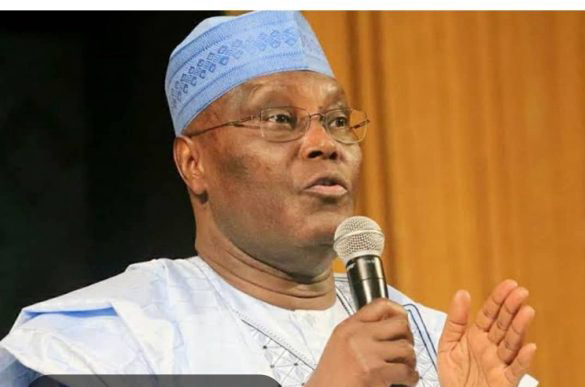
Former Vice President Atiku Abubakar has described the Federal Government’s reported increase in monthly allocations from the Federation Account Allocation Committee (FAAC) as a “money illusion,” arguing that bigger naira figures have not translated into improved living standards for Nigerians.
Atiku, in a statement issued on Wednesday in Abuja by his Senior Special Assistant on Public Communication, Phrank Shaibu, said the apparent increase in FAAC allocations must be measured against the depreciation of the naira, inflation, declining purchasing power and the debt burden confronting state governments.
He argued that although FAAC distributions had risen significantly in nominal naira terms, the real value of the allocations had declined when measured against the dollar and purchasing power, describing the development as evidence that bigger figures did not necessarily mean greater prosperity.
According to him, FAAC distributions rose from approximately N7.85 trillion in 2019, which he said was worth about $25.6 billion at the prevailing exchange rate, to about N21.9 trillion in 2025, with an estimated dollar value of roughly $14.6 billion.
Atiku said the figures showed that while the amount of naira being distributed had nearly tripled, its underlying dollar value had fallen by more than 40 per cent. He therefore challenged the government to explain why Nigerians should regard the increase as an economic success when the value of the currency had weakened substantially.
“You cannot batter the currency, allow inflation to ravage purchasing power and then wave bigger naira figures before Nigerians as evidence that the country has become richer,” Atiku said.
The former vice president also used the minimum wage to illustrate his argument, saying the nominal increase in workers’ earnings had not necessarily translated into an improvement in their real purchasing power.
He noted that N30,000, the minimum wage in 2019, was worth about $83 at the time, while the same amount was worth roughly $65 by May 2023. He said that although the minimum wage had subsequently risen to N70,000, its value at an exchange rate of about N1,320 to the dollar was approximately $53.
Atiku argued that the development meant that a worker could earn more naira while still being unable to afford as much food, transportation, electricity, healthcare and housing as before.
He said the real test of economic performance should therefore be the purchasing power of citizens and what government revenues can deliver, rather than the size of figures announced after FAAC meetings.
“If FAAC is truly booming, then where is the boom? Where is it in the price of food? Where is it in transport, electricity, healthcare, housing and jobs?” he asked.
Atiku also questioned why several state governments remained heavily indebted despite what he described as unprecedented increases in federal allocations. Citing a September 2026 report based on Debt Management Office data, he said 12 states whose governors were approaching the end of their tenures had a combined debt burden of approximately N5.3 trillion, comprising N2.16 trillion in domestic debt and about $2.33 billion in foreign obligations.
He said the figures raised questions about how increased government revenues were being deployed, particularly amid outstanding pension and gratuity obligations, unpaid contractors and other liabilities. Atiku argued that revenue should be judged by the infrastructure it delivers, debts it settles and improvements it brings to citizens’ lives.
The former vice president also called for greater scrutiny of government expenditure, including concessions, import waivers, revenue exemptions, duplicated and abandoned projects and other areas where he alleged public resources could be wasted.
He maintained that fiscal responsibility should apply across government and should not disproportionately affect ordinary Nigerians who are already struggling with rising living costs.
Atiku said Nigerians experience the economy through the prices they pay for food, transportation, school fees, medicine, electricity and housing rather than through government spreadsheets or FAAC communiqués.
He consequently challenged the Tinubu administration to demonstrate that increased allocations were translating into better living conditions, stronger purchasing power and reduced economic pressure on households.
“More naira is not automatically more prosperity,” he said, insisting that the ultimate measure of economic success should be whether Nigerians are actually better off.
Related
Shettima Clarifies Remarks On Northern Governors Support For Tinubu In 2023

Tinubu Orders 95% NIN Enrollment By December

Leave a Reply