NLC gives FG two-week ultimatum on wage talks, petrol price
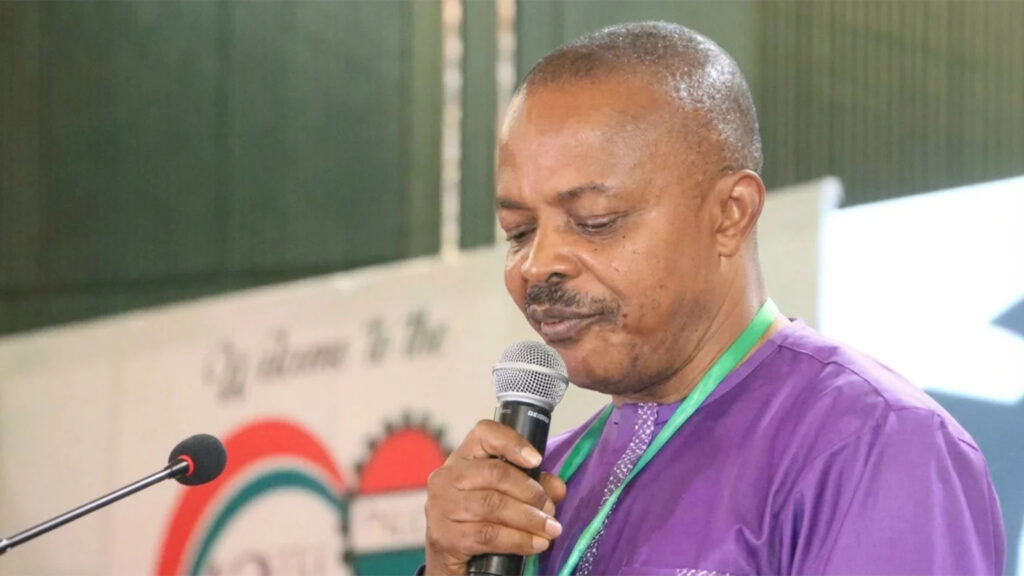
Nigeria Labour Congress (NLC) has given the Federal Government a two-week ultimatum to commence negotiations for a new national minimum wage and take immediate steps to reduce the price of petrol, warning that failure to meet its demands could trigger fresh industrial action.
The ultimatum, which takes effect today, October 9, was issued at a joint meeting of the National Executive Council (NEC) and Central Working Committee (CWC) of the NLC in Abuja.
Similarly, the Association of Senior Staff of Banks, Insurance and Financial Institutions (ASSBIFI) has urged the Federal Government to implement policies to alleviate workers’ economic hardship, particularly the rising costs of food, transportation, healthcare, housing , education, and provide adequate security.
The labour centre demanded that the Federal Government begin the renegotiation of the national minimum wage before the end of October, arguing that the current wage had been rendered worthless by the continued depreciation of the naira and rising cost of living.
It also demanded that petrol prices be reduced to the level prevailing when the present national minimum wage was signed into law in 2024, saying the high cost of Premium Motor Spirit (PMS) had triggered increases in transportation, food and other essential commodities.
In a communiqué issued after the meeting and signed by the NLC President, Joe Ajaero, the union said the ultimatum was necessary because workers could no longer cope with the worsening economic conditions.
The NLC said: “The current national minimum wage has been rendered worthless by the relentless depreciation of the naira and the astronomical rise in the cost of living,” adding that workers could no longer afford basic necessities, including food, shelter, healthcare, transportation and education.
It therefore demanded a “living wage that reflects the true cost of living and the dignity of the Nigerian worker,” insisting that any further delay in opening negotiations was unacceptable.
On petrol prices, the congress said the Federal Government must work with relevant agencies to immediately bring down the pump price, accusing the government of allowing “indiscriminate hikes” in petroleum products.
Beyond the wage and petrol price demands, the NLC directed the government, within the two-week period, to implement the terms of settlement reached with the Joint Health Sector Unions and Assembly of Healthcare Professionals (JOHESU) on February 5, 2026, and to address new demands arising from the agreement.
It also demanded the implementation of the Joint Public Sector Negotiating Council (JPSNC) ‘s demands.
Acting National President of ASSBIFI, Fanimokun Adesina, at the commemoration of the 2026 World Day for Decent Work, held on Wednesday at the ASSBIFI Events Centre, Alausa, Ikeja, Lagos, described as unacceptable a situation where the national minimum wage could not adequately meet workers’ basic needs, stressing that workers deserved to be treated with dignity.
He said: “A situation whereby the national minimum wage cannot buy a bag of rice or provide three square meals for an average Nigerian family of four for two weeks is nothing but slavery. Workers are not slaves; we must be treated with the dignity that decent work reflects.”
Adesina described the theme for the year, ‘Young Workers Organising for the Future’, as very apt, as it tends to address the existential succession challenges facing trade unions in Nigeria and the world of work.
“The future of work is no longer in the future; it is here. It is defined by Artificial Intelligence (AI), digitalisation, automation, platform economy, Algorithm Management, outsourcing, among other evolving workplace technologies.”
He also called on banks, insurance companies and other employers to respect workers’ freedom of association and allow them to join trade unions of their choice without intimidation, threats or victimisation in line with the provisions of International Labour Organisation (ILO) Conventions 87 on Freedom of Association, 98 on Collective Bargaining and ratification of ILO Convention 158 on Termination of Employment.
Related

FG rejects immediate solar import ban to protect energy goal
2027: Tinubu kicks off re-election campaign in Kaduna Oct 24
Leave a Reply