FG mandates MDAs to buy vehicles from local assemblers, threatens sanctions
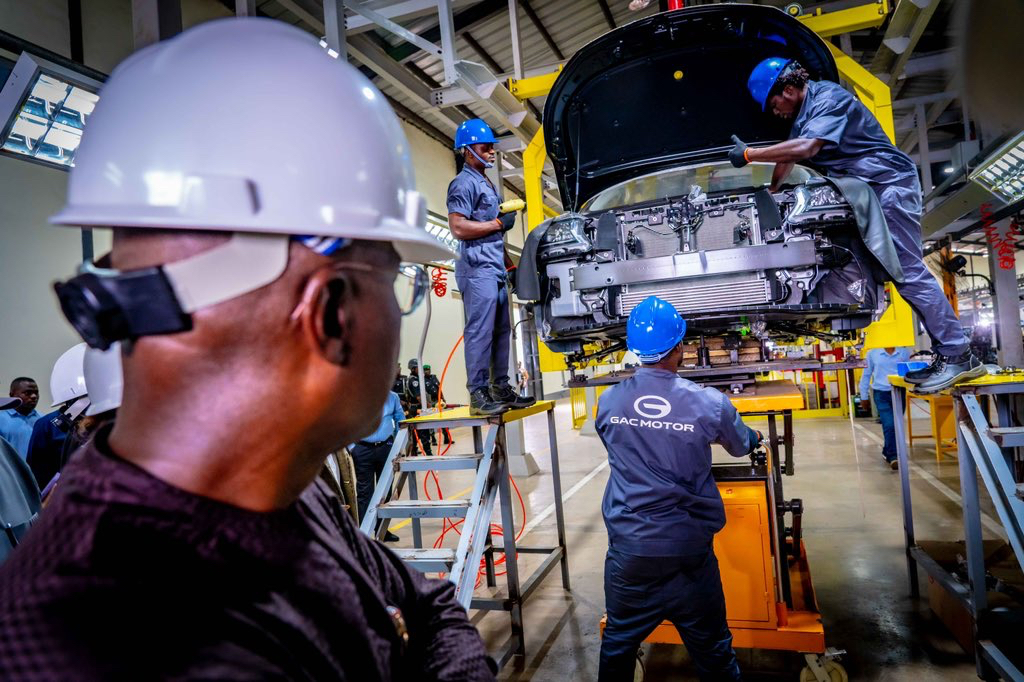
The federal government has directed all ministries, departments and agencies (MDAs) to procure vehicles exclusively from licensed local assemblers or their authorised retailers under the “Nigeria First” policy, warning that violations will attract sanctions.
Oluwemimo Osanipin, director-general of the National Automotive Design and Development Council (NADDC), announced the directive in Abuja on Friday during a joint press briefing with Adebowale Adedokun, his counterpart at the Bureau of Public Procurement (BPP).
Osanipin said government agencies must obtain presidential clearance before purchasing foreign-assembled vehicles.
“We are fundamentally shifting the Nigeria First Policy. All vehicles procured by ministries, departments and agencies, including project utility vehicles, must be sourced exclusively from licensed local assemblers or their authorised retailers,” the NADDC boss said.
He said no MDA could procure a foreign-assembled vehicle unless it demonstrated that no domestic alternative existed and obtained direct presidential approval.
“Every vehicle supplied to the government must carry a traceable Vehicle Identification Number (VIN) verified through the NADDC,” he said.
“Any supply outside licensed local assembly lines will attract immediate regulatory sanctions, including blacklisting and licence revocation.”
Osanipin said Nigeria’s vehicle assembly plants have an annual production capacity of 370,520 vehicles, adding that prioritising local manufacturers in government procurement would create jobs, reduce imports and support domestic component production.
He urged vehicle assemblers to take advantage of the policy by producing vehicles that ordinary Nigerians could afford.
“There are vehicles that are for high-end people; continue to produce them, but let’s take advantage of the over 250 million Nigerians who need mobility at a very reasonable cost,” he said.
He also urged local manufacturers to increase the production of spare parts, noting that demand for components extends beyond the initial purchase of vehicles.
“The major beneficiary of the policy will be the local content manufacturers. We spend more on spare parts than even procurement of vehicles,” Osanipin said.
He stated that increased government purchases of locally assembled vehicles would generate further business for domestic maintenance and servicing providers throughout the vehicles’ lifespan
BPP WARNS ASSEMBLERS OVER QUALITY, MAINTENANCE
On his part, Adedokun said the federal executive council (FEC) had designated the BPP as the agency responsible for setting standards across sectors and providing the institutional framework for implementing the “Nigeria First” policy.
He said the bureau had consulted local vehicle assemblers and other stakeholders to understand the challenges facing the automotive industry, particularly concerns about whether the government would provide a reliable market for locally manufactured vehicles and components.
“We undertook what is usually not the norm, stakeholder consultation with the local assemblers. We understood their problems. Their biggest fear was market,” Adedokun said.
“Their biggest fear was that even if we continue to produce, will Nigeria patronize us, including those in the spare parts sector.”
He said Nigerian companies were producing spare parts that were of high quality and adapted to the country’s environment and needs.
Adedokun said the policy would support industrialisation, create jobs, employ technicians and other skilled workers, and position Nigeria as a production hub serving the Economic Community of West African States (ECOWAS) and the wider African market.
He said the bureau would continue engaging manufacturers to ensure they meet required standards, warning that assemblers who violate the policy would face sanctions.
“We have a mechanism called debarment; any assembler that violates this principle would be sanctioned in line with the provisions of the circular and government external guidelines,” he said.
“We are putting a strong monitoring and evaluation system to ensure that assemblers up their game, improve their innovation and technology. We will ensure that all federal government entities patronize made-in-Nigeria vehicles,” he stated.
The FEC approved the “Nigeria First” policy in May 2025 to prioritise locally made goods and services in government procurement.
Related
2027: NDC vows legal action over omitted candidates
Xenophobia: FG evacuates 111 more Nigerians from South Africa
Leave a Reply