ALL 62 Ebola contacts test negative as NCDC completes 21-day monitoring
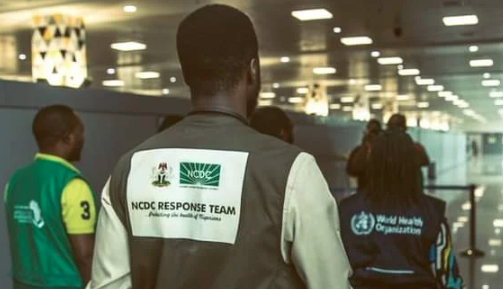
The Nigeria Centre for Disease Control and Prevention (NCDC) says it has completed the 21-day monitoring of all 62 contacts linked to the country’s imported case of Bundibugyo virus disease, with none developing the infection.
Jide Idris, director-general of the NCDC, announced the development in Abuja on Friday at a press briefing, saying the last contact completed the monitoring period and was discharged on November 13.
Idris said 13 of the 62 contacts reported fever or other non-specific symptoms during the monitoring period, but all tested negative for the virus.
“Today, we announce an important milestone in our national response to the imported case of Bundibugyo virus disease,” he said.
“The 21-day monitoring period for all 62 identified contacts has been completed with the last contact discharged today.
“We are glad to announce that none of the contacts became ill, meaning no transmission from the index case.”
The NCDC director-general said the outcome demonstrated the importance of early recognition, prompt investigation and community cooperation in containing infectious disease outbreaks.
He, however, cautioned that the completion of contact monitoring did not mean the outbreak had formally ended.
“Given the ongoing transmission of Ebola in the DRC, Nigeria remains vigilant and at high alert. Our National Emergency Operations Centre remains activated at level 3 to protect the health of all Nigerians,” he said.
He commended public health teams and healthcare workers in the Federal Capital Territory (FCT), whose vigilance led to the initial alert, as well as the 62 contacts and their families for complying with public health advice.
The NCDC director-general also urged Nigerians to remain vigilant as travel and social gatherings increase nationwide ahead of December.
He advised members of the public and travellers to remain calm but seek medical attention immediately if they feel unwell, while disclosing their recent travel history to healthcare providers.
Idris also warned against unprotected contact with the blood or other body fluids of anyone exhibiting symptoms.
He urged Nigerians to rely on verified information from the agency’s official communication channels.
BACK STORY
On October 20, the federal government said it had recorded a confirmed case of Ebola disease in the Federal Capital Territory (FCT).
The patient was identified as a 42-year-old woman who had travelled from Uganda and arrived in Abuja on October 3 via Addis Ababa, Ethiopia.
She developed symptoms on October 7 and was admitted to a private health facility on October 11.
The NCDC was notified on October 19, prompting an investigation and sample collection. The agency’s national reference laboratory confirmed the infection the following day.
The patient was subsequently evacuated to Switzerland on October 26 for further medical care, alongside her husband, who was identified as a close contact.
She had since recovered and was discharged from hospital on November 11.
Following the confirmation, the NCDC activated its emergency response mechanisms and commenced contact tracing, surveillance, laboratory testing and other containment measures.
The agency eventually identified 62 contacts, including healthcare workers and other people who had been exposed to the index case.
Related

ASUU bars officials from endorsing 2027 candidates, parties
FG records 16 Nigerian deaths in Addis Ababa, warns travellers
Leave a Reply