Makinde’s N100bn loan gets Assembly nod, draws APC fire
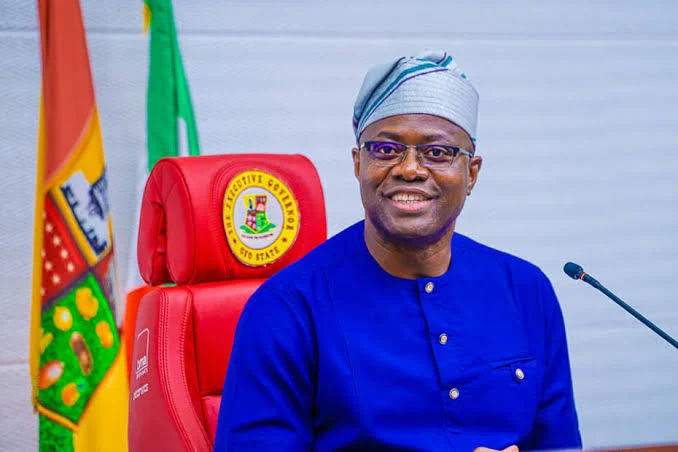
The Oyo State House of Assembly on Wednesday approved Governor Seyi Makinde’s request for a N100bn loan to fund ongoing infrastructure projects and other developmental initiatives, drawing criticism from the All Progressives Congress and the campaign organisation of its governorship candidate, Sarafadeen Alli, over concerns about the state’s debt burden and the timing of the borrowing.
On Wednesday, the Assembly had approved the N100bn loan facility tied to the provision of additional funding for critical infrastructure development and facilitating the timely completion of ongoing projects across the state.
The approval followed a letter of request by Makinde to the Assembly, read by Speaker Adebo Ogundoyin, during plenary on Wednesday.
The letter stipulated that the N100bn loan would be sourced from United Bank for Africa Plc “for the completion of ongoing infrastructure projects and funding other critical developmental initiatives across the 33 local government areas of the state.”
Also stipulated in the letter was an accompanying N300bn facility which would be used to refinance an existing contractors’ finance facility obtained from Access Bank.
However, the state chapter of the APC and the Sarafadeen Alli Campaign Organisation berated Makinde over the fresh N100bn loan, stating that the development was another “demonstration of impunity, recklessness and insensitivity against the masses.”
The APC, in a statement issued by its Publicity Secretary, Olawale Sadare, faulted the governor for alluding to the need to refinance existing loans and continue ongoing infrastructural projects as the reason for the loan request.
The party said, “As usual, Makinde quoted refinancing of existing loans and ongoing infrastructural projects as the reason for the loan request, but every reasonable individual knows that there are other ulterior intentions.
“Since 2019, Oyo treasury has been bleeding in all body parts because it is under the reign of wasteful spenders.
“Makinde would prepare an appropriation document and get it passed for an annual budget only to run back to the state lawmakers midyear to get another nod for a supplementary budget approval even when the original budget had not been implemented in accordance with the dictate of the law.”
The party vowed that Makinde would be made to account for his years in office at the expiration of his tenure on May 29, 2027.
“The recent resignation of the Director-General of the Due Process Office as well as the gale of resignations of top officials in the Makinde administration is a pointer to the fact that the hen is coming home to roost after May 29, 2027.
“As a matter of fact, Makinde shall be made to account for every kobo of the money belonging to our dear state while in office immediately after the expiration of his final term in about seven months,” APC stated.
On its part, the campaign organisation condemned Makinde’s decision to proceed with securing a fresh N100bn loan, despite earlier warnings against “reckless” borrowing in the twilight of his administration.
The organisation described the development as an alarming demonstration of fiscal irresponsibility and political desperation.
SSACO, in a statement issued by its Director of Media and Publicity, Bisi Oladele, in Ibadan, the state capital, said the speed with which the approval was granted by the Assembly was indicative of a deliberate attempt to “bankrupt the state for the incoming administration and mortgage the future of the state.”
The statement read, “We are convinced that this N100 billion loan is not about building roads, improving hospitals, strengthening education or creating jobs. We suspect that it is about financing elections, sustaining a collapsing political structure and prosecuting the governor’s desperate succession agenda at the expense of generations of Oyo citizens.
“The SSACO is more than convinced that the governor’s latest borrowing initiative reflects growing desperation within an administration increasingly confronted by political uncertainty, declining public confidence and the steady erosion of its support base.
“The economic justification for obtaining another N100 billion loan at a time when the state is already grappling with substantial debt obligations and when the administration has barely seven months left in office is questionable.”
It criticised the state House of Assembly for offering itself as a willing tool to endorse the governor’s borrowing requests without demonstrating sufficient independence or subjecting the proposals to rigorous public scrutiny.
“The House of Assembly must understand that its constitutional responsibility is to protect the interests of the people, not merely to provide legislative cover for the financial excesses of the executive. Approval by the legislature does not automatically confer economic wisdom, transparency or public interest on a borrowing decision,” the campaign organisation said.
The SSACO warned that the APC would resist any attempt to convert public borrowing into a financial war chest for partisan political activities, stressing that the resources and creditworthiness of the state must never be treated as the personal property of any governor or political party.
“The governor may have seven months left in office, but he does not have the moral licence to commit future generations to unsustainable financial obligations merely to advance his political interests. His tenure will end, but the debts he accumulates could remain with our people for decades.
“We are putting the governor, the House of Assembly and every prospective lender on notice: the next administration will have both the responsibility and the right to subject questionable financial commitments to lawful and comprehensive scrutiny. Legislative approval will not shield anyone from accountability where wrongdoing is established.
“Oyo is bigger than Governor Makinde, bigger than his political ambitions and certainly bigger than his preferred successor. He must stop this reckless borrowing spree, abandon any attempt to mortgage the future of our people and prepare to hand over a financially viable state in May 2027.
“The people of Oyo will not forgive any deliberate attempt to sacrifice their future on the altar of political desperation,” the statement concluded.
According to Makinde’s request letter to the Assembly, the proposed loan arrangement is such that UBA will provide the refinancing facility at an interest rate of 22 per cent, representing a four-percentage-point reduction in the interest rate on the existing loan.
The facility carries an interest rate of 22 per cent, subject to review in line with prevailing money market conditions, and a tenor of 48 months.
The terms also provide for a management fee of 0.25 per cent per annum on the outstanding amount and an advisory fee of 0.5 per cent annually on the outstanding balance.
The refinancing arrangement is expected to ease the state government’s financing burden and enable it to concentrate its contractors’ finance facility operations with UBA, subject to the agreed terms and conditions.
The financing arrangement includes a three-month moratorium on the repayment of both principal and interest. Interest accruing during the moratorium period is to be repaid alongside the fourth, fifth and sixth loan repayments, respectively.
Contributing to the deliberations, the Deputy Speaker of the House, Abiodun Fadeyi, alongside Gabriel Adebayo (Ibadan North II), Olorunpoto Rahman (Oyo East/Oyo West) and Sunkanmi Babalola, highlighted the importance of sustained infrastructure investment in creating lasting developmental legacies for the state.
The lawmakers referenced major projects, including “the Ladoke Akintola University Teaching Hospital in Oyo, the Rashidi Ladoja Circular Road and the Ido-Eruwa Road, among other ongoing infrastructure initiatives,” as examples of projects whose timely completion would contribute to economic growth, improved connectivity and better access to public services.
They said, “Completing ongoing projects would ensure that investments already made translated into tangible benefits for residents, while sustained infrastructure development would generate employment opportunities, stimulate commercial activities and improve the movement of people, goods and services across the state.”
Related
Osun APC accuses Adeleke of sidelining members in Tinubu campaign council inauguration
Ogun shuts schools as over 100 pupils are hospitalised after gas emissions
Leave a Reply